A demo can make an on-chain AI workflow legible. That is a real result - and a specific one. This note draws the boundary precisely: what the current build demonstrates, what the presented figures do not establish and which connected evidence moves each claim across the line.
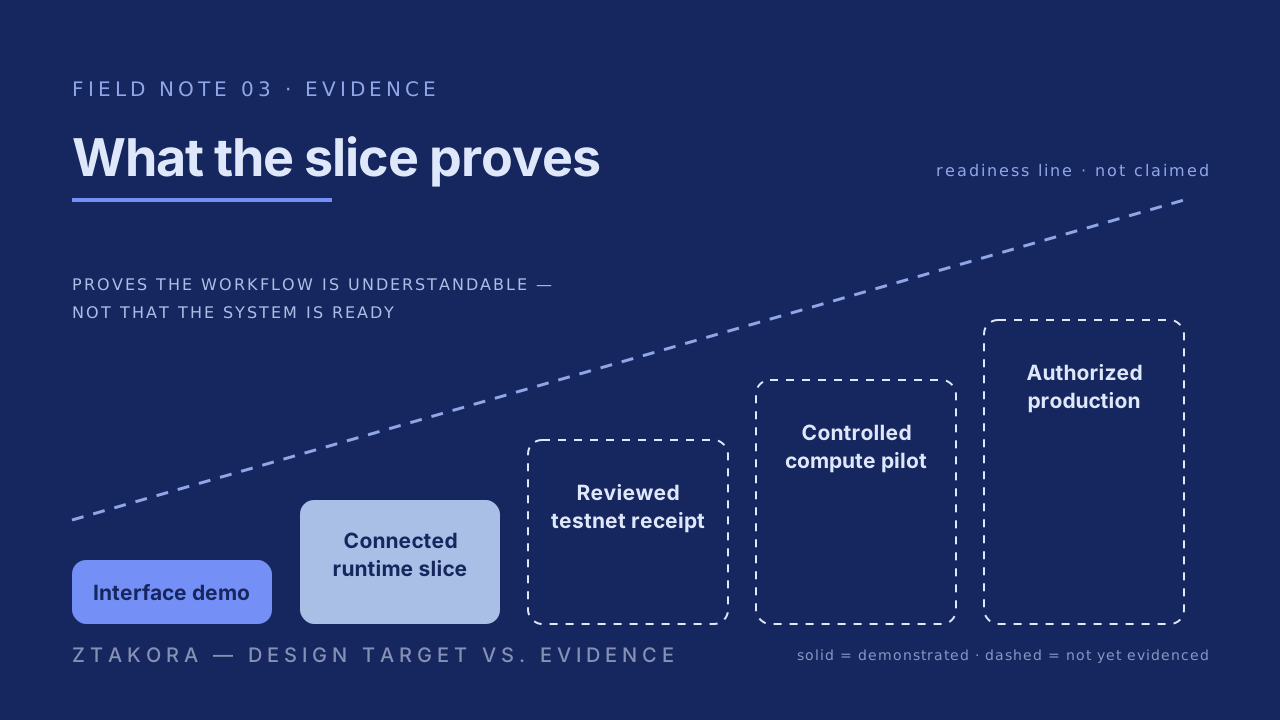
A demo can prove that a workflow is understandable. Only connected runtimes, test evidence and authorized operating arrangements can prove that it is ready.
The current build proves a coherent runtime vocabulary.
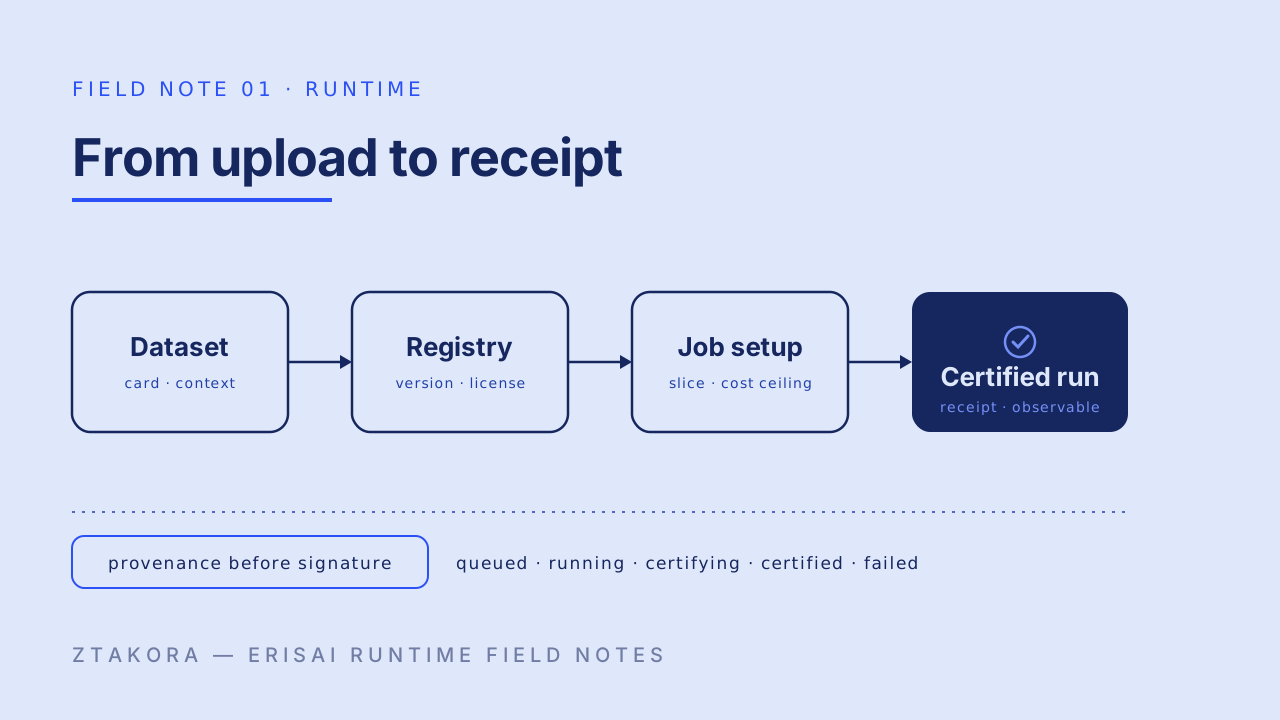
The ErisAI demo connects model registry, dataset review, job setup, runtime status, receipts and history inside one consistent interface. It makes the intended audience and the major compute journeys reviewable.
It also demonstrates a calmer visual direction for on-chain AI: provenance and runtime facts carry more weight than abstract blockchain decoration, while consequential actions are grouped into focused panels.
- Information hierarchy
- Navigation and screen relationships
- Job-state vocabulary
- Responsive product direction
Static figures do not establish live models, accuracy or cost.
Benchmark scores, latency, throughput and cost figures shown in a frontend are not independently verified simply because they are well presented. They must be sourced from reviewed runs and reconciled with the runtime and evaluation evidence before any production use.
The demo also does not establish model licensing, data provenance, custody, external audit completion or the availability of any token. Those are separate operating, legal and regulatory workstreams.
Readiness advances through connected evidence.
The next level is a connected slice: one dataset record, one model version and one certified inference synchronized across the product. Testnet evidence should show the source of each state, the expected failure paths and the reconciliation result.
A controlled pilot adds named operators, GPU-subnet acceptance criteria, security review, incident procedures and jurisdiction-specific boundaries. Production readiness comes only after those controls are proven together.
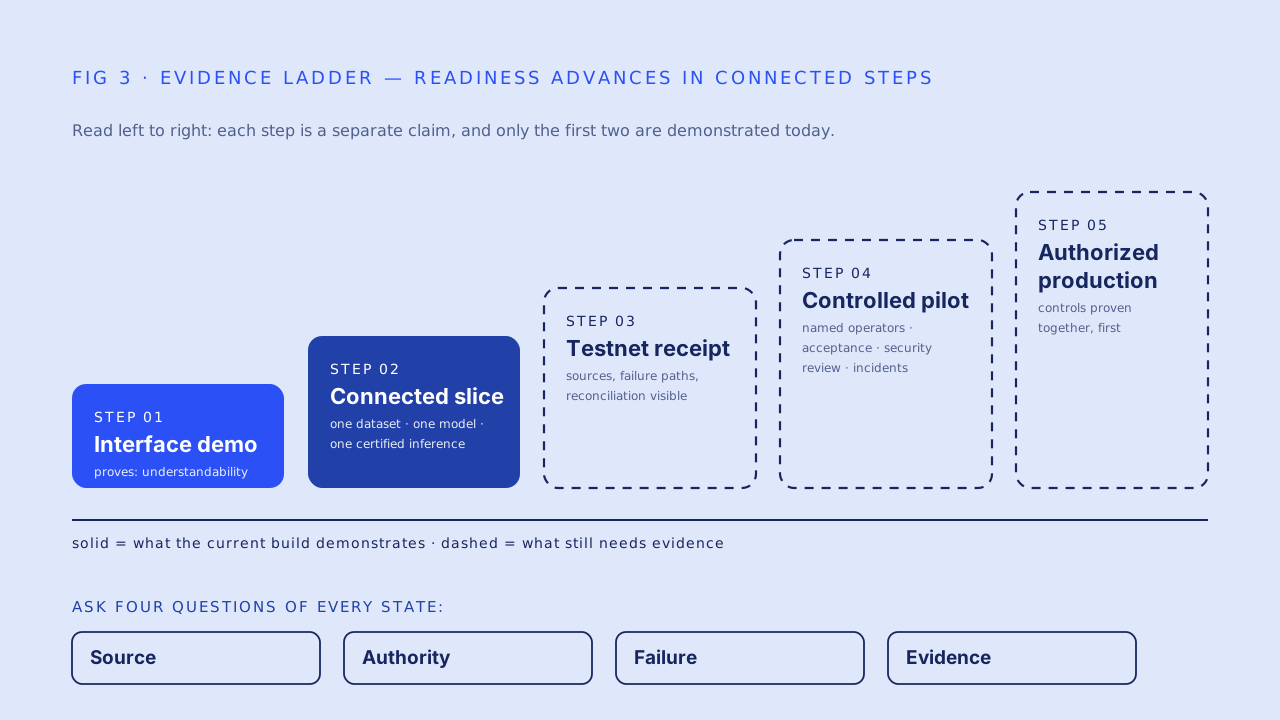
The ladder from demo to production - each rung requires a different kind of evidence.
The honest demo invites precise questions.
A useful review asks which states are live, which are simulated, where each value comes from and what happens when a dependency fails. The answer should be visible in the product or its evidence package, not dependent on a sales explanation.
Four questions apply to every state on screen:
- Source: Where does the value come from, and how fresh is it?
- Authority: Which user, service or contract is allowed to change it?
- Failure: What becomes visible when a dependency rejects or delays the action?
- Evidence: What test, record or independent review supports the claim?
Ztakora will use that standard to decide which demo surfaces graduate into connected builds and which remain product-direction experiments.
Continue with the product and architecture.
- Product walkthrough: Inside the ErisAI demo: from dataset upload to certified inference
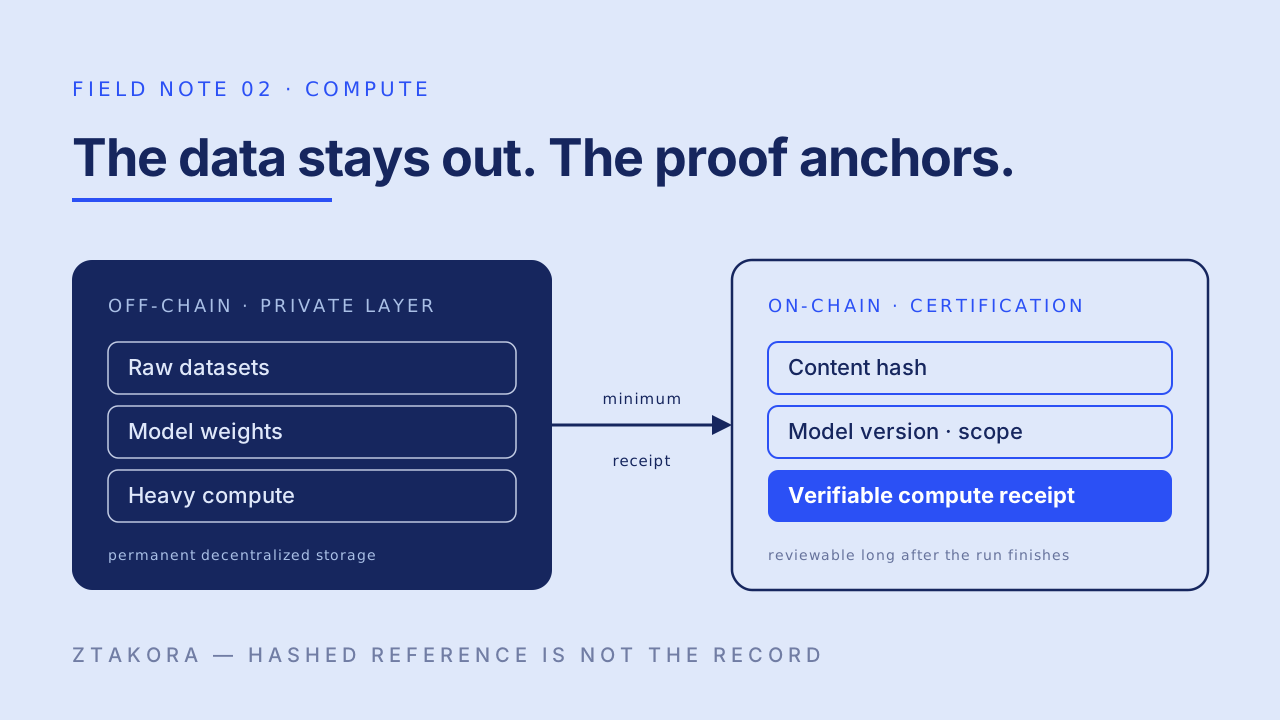
- Architecture note: Verifiable compute receipts without putting datasets on-chain
- Operating boundaries: the company brief, or bring one precise question to the team
Product-direction content only. No model, accuracy, cost or availability claim.